Most Indian managers know this routine. Tasks are assigned in a WhatsApp group, half of them slip past the deadline, and the manager spends the evening sending “status?” messages. At appraisal time, the people who were visible in the last month get the credit, while the steady performers who closed their checklists every single day go unnoticed.
Employee gamification is one way to fix this. Done well, it makes everyday work visible, rewards consistency and gives teams a reason to finish tasks on time without a manager chasing them. Done badly, it turns into a points race that people game or quietly resent. This guide explains how Indian businesses can use XP, leaderboards, badges and rewards the right way.
What is employee gamification?
Employee gamification means applying game elements, such as points (often called XP), levels, badges, leaderboards and rewards, to everyday work tasks. When an employee completes and gets approval for a task, they earn points; points move them up a leaderboard and unlock badges or rewards. The aim is not to turn work into a game, but to make progress visible and give regular, small recognition for work that usually goes unnoticed.
Where gamification works well, and where it does not
Gamification suits work that is frequent, clearly defined and easy to verify. It is a poor fit for work where speed or volume would hurt quality.
| Works well for | Use with care for |
|---|---|
| Sales activities: calls made, follow-ups done, proposals sent | Long creative or strategic projects with no daily output |
| Operations checklists: opening and closing routines, stock checks, dispatch steps | Safety-critical work, where rewarding speed can encourage shortcuts |
| Field teams: site visits, installations, service calls completed | Work where one complex task is worth more than ten simple ones |
| Internal support tickets resolved | Roles where quality cannot be checked before points are given |
| HR and admin tasks with clear deadlines | Teams going through layoffs or major change, where rankings can feel threatening |
Seven design rules for a gamification system that lasts
1. Reward completed and approved work, not just activity
If points are given the moment someone ticks a box, people will tick boxes. Award XP only after a manager or reviewer approves the task. This one rule prevents most gaming.
2. Weight points by priority and effort
A high-priority client proposal should be worth more than updating a spreadsheet. Set XP values per task type or priority level, and review them after the first month.
3. Watch for the metric becoming the goal
This idea is often summed up as Goodhart’s law: when a measure becomes a target, it stops being a good measure. If you award points for “calls made”, you may get more short, useless calls. Pair activity points with outcome checks, such as meetings booked or tickets closed without reopening.
4. Use more than one leaderboard
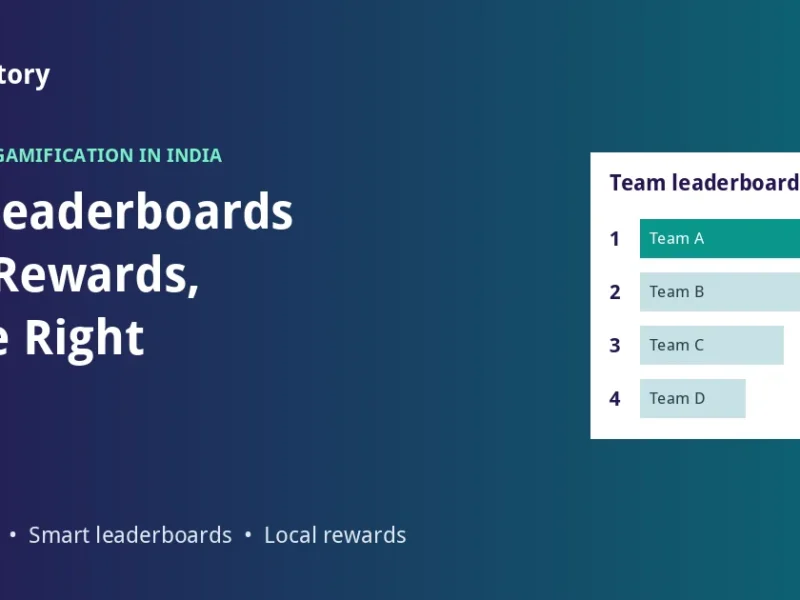
A single company-wide ranking often shows the same three names at the top every week, which demotivates everyone else. Run team-wise leaderboards, weekly resets or separate boards for new joiners so more people have a realistic chance to lead.
5. Control who sees the rankings
Some teams enjoy public rankings; others find them stressful. Decide whether leaderboards are visible to the whole company, only to each team, or only to managers. You can start private and open them up later.
6. Make rewards meaningful but small
Frequent, modest rewards work better than one big prize at the end of the year. A coupon for a local café or store, a badge for a 30-day streak or a public shout-out in the Monday meeting all count. Keep XP and formal salary decisions clearly separated, or the system will start to feel like surveillance.
7. Pilot with one team first
Choose one team with clear daily tasks, such as inside sales or operations, and run a 30-day pilot. Ask the team what felt fair and what did not before rolling out to the rest of the company.
An illustrative XP setup for a sales and operations team
The table below is an example for a mid-sized Indian distributor. It is not a benchmark; your values should reflect your own priorities.
| Task | Team | Priority | Example XP |
|---|---|---|---|
| Follow up all leads due today | Sales | High | 30 |
| Send a proposal after a client meeting | Sales | High | 40 |
| Update visit notes the same day | Field sales | Medium | 15 |
| Complete daily dispatch checklist | Operations | Medium | 20 |
| Weekly stock reconciliation | Operations | High | 35 |
| Resolve an internal support ticket | Admin / IT | Low | 10 |
Common mistakes Indian businesses make with gamification
- Launching without explaining why. Staff assume it is a tracking tool. Explain that the goal is recognition and fewer reminder messages.
- Linking points directly to salary. Once XP decides pay, people optimise for points instead of good work.
- Setting XP values once and never revisiting them. Review the point values monthly in the first quarter.
- Running rewards that do not suit the city. A reward that is easy to redeem in Bengaluru may be useless to a team in Salem or Coimbatore. Choose rewards people can actually use where they live.
- Letting the system replace conversations. A leaderboard shows who completed tasks. It does not replace a manager’s one-to-one with a struggling team member.
How to measure whether it is working
Compare the 30 days before launch with the first 30 to 60 days after. Useful measures include:
- Percentage of tasks completed by the deadline
- Number of overdue tasks at the end of each week
- How many team members earn XP each week (participation, not just top scores)
- Time managers spend chasing updates
- What the team says in a short anonymous feedback form
If completion improves but feedback is negative, adjust visibility and rewards before scaling up.
How Zea Play brings this together
Zea Play, built by URL Factory in Salem, is a gamified task management platform that turns everyday tasks into XP, leaderboards and real rewards. Managers assign tasks with deadlines and priorities, XP is credited when a task is completed and approved, and admins set XP values by task type, priority or department. A real-time leaderboard updates as work is completed, badges mark milestones such as consistency streaks, and admins control whether rankings are visible to everyone, specific teams or managers only.
Once employees reach an XP threshold, they can redeem coupons from partner cafés, restaurants and stores in their city, and admins can switch rewards on or off. Zea Play also includes a Kanban board, a ticketing module for internal requests, performance reports and role-based access, and it can be used as a plain task manager if you are not ready for gamification yet.
Zea Play is one part of the URL Factory product suite, alongside ZeaCRM for leads and follow-ups, Zea Brain for answers across business data and Zea Voice for AI call answering. If your team needs a workflow none of these cover, our custom software development team can build it. If you are deciding where automation should start, read what to automate first.
Frequently asked questions
Does employee gamification actually improve productivity?
It can, when it rewards clearly defined, approved work and is introduced fairly. It works best for frequent, verifiable tasks and poorly for work where speed hurts quality. Run a pilot and measure task completion before and after.
Will employees see gamification as surveillance?
They might if it is launched without explanation or tied to salary. Explain the purpose, give points only for approved work, keep XP separate from pay decisions and let teams choose how visible the leaderboard is.
What rewards work best for Indian teams?
Small, frequent and locally useful rewards, such as coupons for nearby cafés and stores, streak badges and public recognition, tend to work better than one large annual prize.
How do I stop people gaming the points system?
Give XP only after approval, weight points by priority, pair activity points with outcome checks and review point values regularly.
Can gamification work for remote and hybrid teams?
Yes. A shared online leaderboard and task board give remote employees the same visibility and recognition as people in the office.
Which teams should start first?
Start with a team that has clear daily tasks, such as inside sales, operations or support, and run a 30-day pilot before rolling it out.
See gamification on your own workflows
If you would like to see how your team’s daily tasks could look as XP, leaderboards and rewards, talk to the URL Factory team. Contact Us